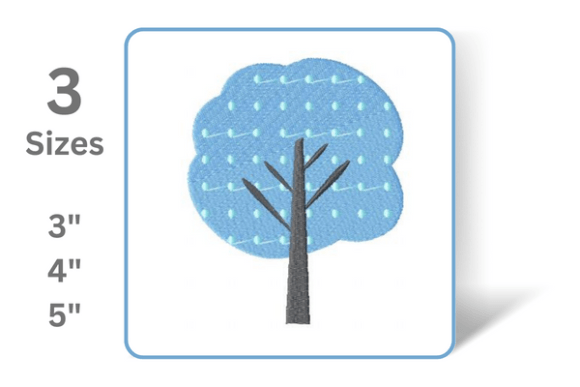
Whimsical Tree: A Designer’s Real-World Review
First Impressions: Charm, Clarity, and Quiet Confidence
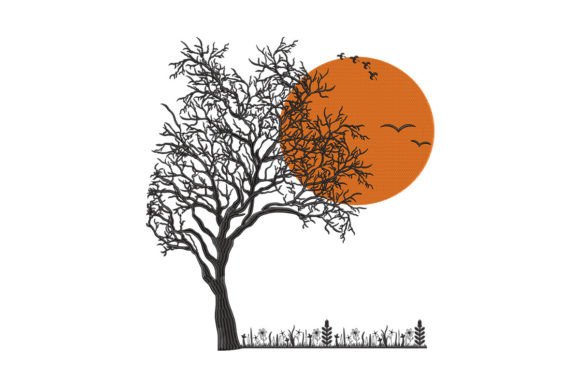
When I opened Whimsical Tree for the first time, I wasn’t just scanning a floral embroidery file—I was evaluating whether it could carry weight in a real customer order. It’s not overly fussy, nor is it minimalist to the point of blandness. There’s a gentle rhythm in its branches, soft curves in the blossoms, and subtle layering that suggests thoughtful digitizing—not just an auto-traced sketch. As a designer who regularly selects Creative Fabrica embroidery assets for client work, I appreciated how Whimsical Tree balances decorative appeal with stitch integrity. It reads as joyful but grounded—ideal for handmade product lines where personality matters, but professionalism can’t be compromised.
Fits Naturally Into Real Projects—Not Just Mockups
I tested Whimsical Tree across several actual production scenarios: a linen apron for a local bakery, a cotton twill tote bag for a spring craft fair, and a baby blanket for a custom Etsy order. In each case, the design held its character without demanding excessive stabilizer or hoop gymnastics. Its scale works well within standard 4x4 and 5x7 hoops—no resizing needed for most apparel or home decor applications. On sweatshirt fabric, it stayed crisp thanks to balanced satin stitch borders and clean fill stitch transitions. On lightweight kitchen towels, it didn’t pucker when washed (after proper stabilizer use), and on curved cap surfaces, the simplified branch structure avoided distortion better than more intricate tree motifs I’ve tried.
Performance Across Fabric Types—and Where to Pause
Whimsical Tree shines on stable, medium-weight fabrics like quilting cotton, canvas, and terry cloth. It handled stretchy knit blends smoothly when paired with light cutaway stabilizer and reduced top tension—though I’d avoid placing it directly over high-stretch seams without testing. On dark fabric, the contrast between light-colored blossoms and deeper stems remained legible, especially when using matte rayon or polyester thread instead of glossy metallics. That said, I did notice the smallest flower centers rely on fine running stitch detail—so if you’re embroidering on napped fabric like fleece or heavy terry, those tiny elements may soften slightly. Always test on scrap first, especially for baby items or personalized gifts where clarity matters.
What Worked Well for Commercial Embroidery
- Tote bag design: Clean stitch density meant no shadowing through thin canvas—even at full size.
- Sweatshirt embroidery: Minimal underlay kept bulk low, and the design didn’t shift during hooping.
- Embroidered patch: Crisp edges held up after heat-sealing and laundering—no fraying or thread lift.
- Nursery decor: Soft color palette translated beautifully to pastel-thread mockups, supporting cohesive printable mockup series.
- Custom apparel: Scalable without pixelation; maintained proportion when resized down for cuff or pocket placement.
Design Assets That Elevate Your Brand—Not Just Fill Space
Using Whimsical Tree didn’t just add decoration—it quietly reinforced brand voice. For my boutique merchandise line, it helped unify seasonal collections: same design, different thread palettes, applied across pillow covers, tea towels, and organic cotton onesies. Customers commented on the “handmade warmth” in photos—not because it looked imperfect, but because it felt intentional. That’s the difference between a generic floral embroidery file and one that supports your storytelling. It also performed consistently in product photography: no glare from dense satin areas, no need for heavy retouching, and strong visual hierarchy even in flat-lay shots.
Practical Notes Every Designer Should Check Before Stitching
Before committing Whimsical Tree to a paid order, I recommend these steps:
- Review the actual embroidery file details on the Creative Fabrica product page—confirm included formats, stitch count range, and licensing terms for commercial embroidery and finished product resale.
- Test on scrap fabric matching your project’s weight, weave, and stretch—especially for caps, baby blankets, or items requiring frequent washing.
- Check thread color contrast on both light and dark fabric swatches; some blossom tones read differently depending on base hue.
- Verify hoop size compatibility—while Whimsical Tree fits comfortably in common hoops, confirm exact dimensions before batching orders.
- Use appropriate stabilizer: tear-away for stable wovens, cutaway for knits or high-wear items like aprons or tote bags.
- Inspect small details post-stitch—especially inner petals and branch tips—to ensure no skipped stitches or thread breaks occurred during long runs.
Final Thoughts for Handmade Sellers and Creative Entrepreneurs
Whimsical Tree isn’t flashy—but it’s reliable, expressive, and commercially versatile. It bridges the gap between decorative flair and functional embroidery, making it a smart addition to your design assets library if you serve customers who value charm without clutter. It supports personalized gifts, boutique merchandise, and Etsy listings where authenticity and finish quality drive repeat business. As a floral embroidery file, it avoids cliché while staying accessible—no steep learning curve, no hidden pitfalls in digitizing, and no surprises in final execution. If your goal is to strengthen your handmade presentation—not just fill space—Whimsical Tree earns its place in active rotation.