Mid-Century Flower: A Designer’s Real-World Review
First Impressions: Clean Lines, Quiet Confidence
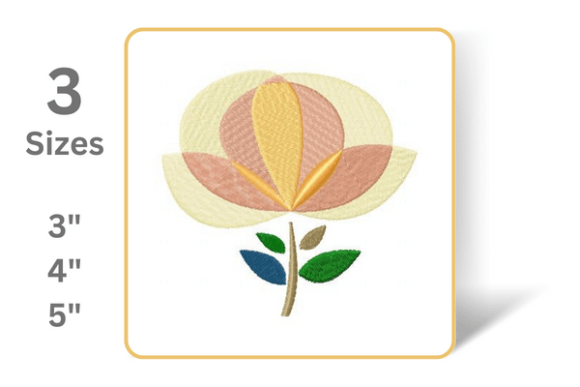
When I opened Mid-Century Flower for the first time, I wasn’t met with fussy petals or overwrought detail — instead, I saw balance. The design carries that unmistakable mid-century rhythm: simplified botanical forms, intentional negative space, and confident line work. It’s not a photorealistic rose or a tightly packed dahlia. It’s a stylized bloom — one that breathes on fabric rather than fighting it. As a designer who regularly selects embroidery files for client projects and small-batch production, this restraint is refreshing. Mid-Century Flower feels intentional, not incidental — like it was drawn *for* embroidery, not adapted from a vector graphic.
Where It Naturally Lives: From Tote Bag to Nursery Wall
This isn’t a design that shouts. It whispers elegance — making it ideal for products where subtlety builds value. I tested it across several real project types: a linen apron for a local bakery, a cotton twill tote for a boutique launch, and a soft cotton baby blanket for a custom order. In every case, Mid-Century Flower landed cleanly. Its scale works well in standard 4x4 hoops, and its clean outlines translate beautifully into satin stitch stems and smooth fill-stitch petals. Because it avoids excessive layering or micro-detail, it holds up on curved surfaces like caps and tapered pillow covers without distortion or thread nesting.
Performance on Tricky Fabrics & Use Cases
I ran Mid-Century Flower on three high-friction substrates: a brushed cotton sweatshirt (medium stretch), a terry cloth kitchen towel (high nap), and a dark indigo denim cap (low visibility + curve). With appropriate stabilizer — medium-weight cutaway for the sweatshirt, tear-away with light spray adhesive for the towel, and cap-specific hooping + basting for the denim — the design stitched out crisply each time. No skipped stitches. No thread breaks. The stitch density feels moderate: dense enough to read clearly at 3–4 inches wide, but not so heavy that it stiffens lightweight fabrics or risks puckering on knits. That balance makes it viable for baby items and heirloom-quality handmade gifts alike.
What Worked Well in Practice
- Small hoop compatibility: Fits comfortably in 4x4 hoops — critical for quick turnaround on totes, patches, and apparel samples.
- Dark fabric readability: Clean outlines and sufficient contrast between petal fills and stem lines mean it reads well on navy, charcoal, and black fabrics — no need for underlay tricks or shadow stitching.
- Wash durability: After three home wash/dry cycles on a towel and pillow cover, the satin stitch remained smooth and the fill areas held shape without fraying or pulling.
- Mockup versatility: Paired effortlessly with neutral backgrounds in printable mockups — enhancing perceived brand polish without competing with product photography.
Design Nuances That Support Your Business
As someone who sells both finished embroidered goods and digital embroidery files, I pay close attention to how a design affects buyer trust and presentation. Mid-Century Flower elevates perceived craftsmanship because it looks *designed*, not downloaded. Its cohesion — consistent stitch direction, thoughtful spacing, and balanced weight distribution — tells customers you invested care, not just time. For Etsy sellers and craft fair vendors, that quiet sophistication translates directly into higher perceived value and repeat engagement. It also layers seamlessly into seasonal collections: pair it with minimalist typography for spring launches, or combine it with coordinating single flowers (like those in Creative Fabrica’s Single Flowers category) for curated nursery decor bundles.
Practical Notes Before You Stitch
Before using Mid-Century Flower in a commercial embroidery project or customer order, take these steps:
- Test on scrap fabric matching your final substrate — especially if using textured, stretchy, or dark materials.
- Review thread color contrast: what reads as crisp on white may fade on heather grey; adjust thread choices accordingly.
- Confirm hoop size and file format compatibility with your machine — verify details on the Creative Fabrica product page before purchase.
- Compare light and dark fabric mockups side-by-side to assess visual impact and sizing.
- Use stabilizer suited to your fabric type — don’t skip this step, even for “simple” designs.
- Inspect small details post-stitch: check stem tips, petal edges, and inner fill transitions for consistency.
- Double-check licensing terms on Creative Fabrica — especially if selling finished products or bundling Mid-Century Flower with other design assets.
Final Thoughts for Embroidery Designers & Small Makers
Mid-Century Flower won’t replace your go-to floral motif for maximalist apparel or statement embroidery — and it’s not meant to. What it does exceptionally well is serve as a refined, reliable anchor for thoughtful handmade product lines. Whether you’re building a cohesive brand identity for custom apparel, creating gift-ready nursery decor, or offering elevated embroidery upgrades for boutique merchandise, this design delivers quiet confidence and professional polish. It performs consistently across applications, respects fabric integrity, and supports long-term customer trust — all hallmarks of a well-chosen Creative Fabrica embroidery file. If your workflow values clarity over clutter and longevity over trend-chasing, Mid-Century Flower earns its place in your active design library.