Sunset in Tree: A Designer’s Real-World Embroidery Review
As someone who’s stitched hundreds of designs across apparel, home goods, and boutique merchandise—most recently a limited-run line of linen tea towels for a local kitchen shop—I opened Sunset in Tree with quiet curiosity. Not hype. Not hope. Just the steady eye of a designer who knows how easily a beautiful digital embroidery file can fall flat once the needle starts moving. This isn’t just another forest-themed motif. It’s a mood, a silhouette, a subtle storytelling device—and it demands thoughtful placement.
First Impressions: Delicate, Not Diminished
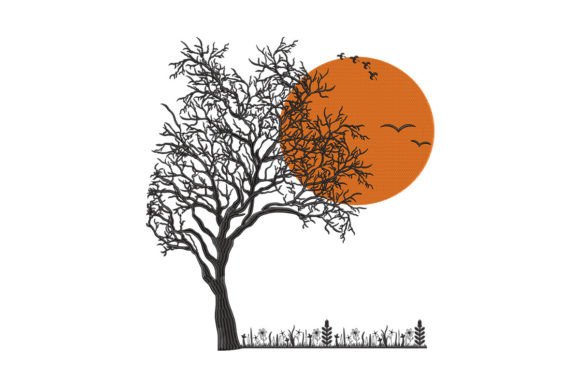
Sunset in Tree lands softly—not with bold outlines or heavy fills, but with layered gradients implied through stitch direction and spacing. The trunk rises with gentle taper; branches fan out asymmetrically, not rigidly; and the “sunset” isn’t a blazing orb, but a soft halo of radiating satin stitches behind the canopy. It reads as calm, grounded, and quietly poetic—more forest meditation than wilderness adventure. That makes it ideal for products where subtlety builds trust: baby onesies, minimalist aprons, linen pillow covers, or unisex sweatshirts meant to age gracefully.
Where It Shines (and Where It Asks for Care)
I tested Sunset in Tree on three real projects: a heavyweight organic cotton tote, a midweight French terry sweatshirt, and a lightweight chambray baby blanket. Here’s what stood out:
- Tote bags & tea towels: Perfect scale and balance. The design breathes without overwhelming the fabric. Satin-stitched branches held crisp definition even after two machine washes—no fraying, no puckering—when paired with medium-weight cutaway stabilizer.
- Sweatshirt embroidery: Worked beautifully on the chest panel, but I avoided the sleeve curve. The lower branches taper too finely for tight contours—on a cap or curved seam, those delicate tips risk distortion or skipped stitches. Stick to flat, stable zones.
- Baby items: Soft enough for sensitive skin, detailed enough to feel intentional. On the chambray blanket, the sunset glow read clearly—even at 3.5" wide—without dense fill that could stiffen the fabric. Parents notice that craftsmanship.
That said, Sunset in Tree asks for attention on textured or stretchy fabrics. On looped terry towels? The fine branch ends blurred slightly—so I added a light tear-away topper. On jersey knit? Only with basting + cutaway + reduced top tension. And on dark fabrics? I swapped the default beige-to-amber thread palette for charcoal-gray trunks and burnt-orange highlights—contrast matters more than literal color matching.
What It Does for Your Craft Business
If you’re an Etsy seller or small shop owner, Sunset in Tree isn’t just a design—it’s a brand signal. It says *thoughtful*, *handmade with restraint*, *designed for living with*. Customers don’t buy “forest embroidery.” They buy the feeling of a slow morning, of quiet intention, of something made to last—not trend-chase. That translates directly to higher perceived value on personalized gifts (think: baby’s first blanket, anniversary pillow cover) and boutique merchandise (a linen apron for a coffee roaster, a canvas tote for a botanical studio).
It also performs well in digital spaces: clean lines render crisply in printable mockups, and the balanced negative space means it scales down to 2.75" for embroidered patches without losing legibility. For commercial embroidery shops, it’s a reliable repeatable—no tricky underlay traps, no excessive jump stitches, no tiny lettering to debug. But remember: if you’re selling finished items, confirm licensing allows commercial use. If you’re reselling the digital embroidery file itself, double-check redistribution rights—Sunset in Tree is part of the Forest category, but license terms aren’t stated here.
Practical Notes Every Designer Should Run Through
Before committing to a client order or bulk production, run these checks:
- Test on scrap fabric first—especially if using textured, dark, or stretchy material. Note how branch tips behave.
- Review stitch density in your editing software. Fill areas under the canopy should sit between 18–22% density—not so sparse it looks thin, not so dense it stiffens the fabric.
- Confirm hoop size compatibility. My version fit comfortably in a 4x4 hoop at full detail—but if you’re working with smaller hoops (3x3 or less), check whether key elements like the sun’s outer glow remain distinct when scaled.
- Inspect small details in both black-and-white and color mockups. Does the gradient hold up on dark backgrounds? Does the trunk retain weight next to airy branches?
- Match stabilizer to end use. Cutaway for apparel, tear-away for towels, lightweight fusible for baby items. Don’t skip this—it’s where many handmade products lose their polished edge.
- Verify thread color contrast before stitching. A warm-toned sunset reads poorly on rust or olive fabric unless you adjust thread choices intentionally.
A Final Thought on Fit and Feeling
Sunset in Tree won’t dominate a garment. It won’t shout from a crowded craft fair table. What it does is invite pause—first from the maker, then from the person who holds the finished product. That quiet resonance is rare. It works because it respects the fabric, the stitch, and the person wearing or using it. Use it where stillness matters: on a nursery wall hanging, a wedding guest towel, a small-batch ceramic studio’s apron, or a holiday gift that feels personal instead of seasonal.
Just remember: no embroidery file is universal. Sunset in Tree thrives when matched to the right project, the right fabric, and the right intention. Test it. Tweak it. Trust your eye—and your needle—before you commit to fifty units. Because in handcrafted work, the difference between “nice” and “unforgettable” lives in those quiet, considered choices.