Flowers on a Vine: A Craft Fair Designer’s Real-World Review
First Impression: Soft, Timeless, and Instantly Recognizable
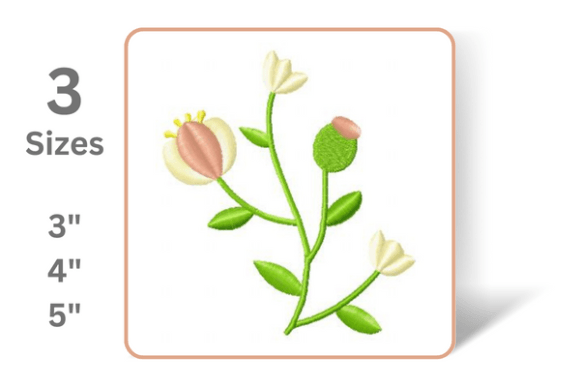
“Flowers on a Vine” lands with quiet confidence—not loud or trendy, but deeply rooted in what handmade buyers love: organic flow, gentle rhythm, and natural charm. It reads as soft farmhouse meets modern botanical—neither overly fussy nor minimalist to the point of sterility. That balance is gold at craft fairs, where shoppers pause for pieces that feel intentional *and* approachable. The title alone conjures movement, growth, and warmth—ideal for small shop products that tell a story before a single word is spoken.
Where Flowers on a Vine Shines on Craft Fair Products
This machine embroidery design thrives where texture and tactility matter most. On a linen tea towel? Gorgeous—the vine wraps naturally around the hem, and blooms pop against absorbent fabric without looking stiff. On a cotton tote bag? Perfect as a centered 4–5" motif near the bottom corner—subtle enough for daily use, distinctive enough to spark “Where’d you get that?” conversations. As apron embroidery? Ideal across the chest pocket or along one strap—it adds personality without overwhelming function.
For embroidered patches, Flowers on a Vine holds up beautifully when digitized with clean satin-stitch petals and smooth running-stitch vines. It scales well down to 2.5", making it versatile for kids’ caps or mini pouches. Pillow covers benefit most from a larger placement (6–7")—the looping vine creates visual flow across fabric, and the floral clusters give dimension without heaviness. And as a market bag accent? It transforms plain canvas into something giftable, memorable, and boutique-worthy.
What Makes This Design Sell—Beyond Pretty
- Instant readability: No decoding needed. Even at 10 feet, shoppers recognize “flowers + vine” — a huge advantage in crowded booth environments.
- Strong visual hierarchy: The vine provides natural leading lines; blooms act as focal points. That guides the eye—and the sale.
- Photogenic consistency: Flowers on a Vine photographs cleanly across fabric types and lighting. It translates well to printable mockups and Etsy listings—no heavy editing required to show its charm.
- Batch-friendly rhythm: Its repeating-but-not-identical structure supports efficient production. You can embroider 12 tea towels in one afternoon without fatigue or inconsistency.
Careful-Use Notes Every Embroidery Designer Should Check
While elegant, Flowers on a Vine isn’t universally forgiving. Dense stitch areas—especially clustered flower centers—can pucker on lightweight knits or delicate silks. Tiny buds or thin vine tendrils may blur on textured terry cloth or heavily brushed fleece. On dark fabric, low-contrast thread colors will vanish—always test thread colors against your base fabric first.
Curved surfaces like caps demand careful hooping and stabilizer selection; the vine’s gentle arc can distort if tension or backing isn’t dialed in. And while it works at smaller sizes, avoid shrinking it below 2" for finished products—petals lose definition, and the design reads as “blobby,” not botanical. Always confirm hoop size compatibility before cutting fabric—some versions may require a 5x7" or larger hoop.
How Flowers on a Vine Elevates Your Handmade Brand
This design quietly reinforces handmade quality. Unlike geometric or text-heavy motifs, Flowers on a Vine feels hand-drawn, alive, and unhurried—exactly the vibe customers seek from small shop products. It strengthens booth display cohesion: imagine a trio of items—tea towel, pillow cover, and patch set—all anchored by the same vine motif. That repetition builds brand recognition without shouting.
Buyer engagement rises because Flowers on a Vine invites connection. It’s nostalgic but fresh, decorative but wearable, detailed but not intimidating. Shoppers don’t just buy a product—they take home a feeling: calm, grounded, gently joyful. That emotional resonance lifts perceived value, supports premium pricing, and encourages repeat visits to your Etsy shop or fair booth.
Essential Embroidery Designer Checks Before Production
- Test the embroidery file on scrap fabric matching your final product—especially for towels, caps, and apparel.
- Verify thread contrast: print a swatch or hold threads against fabric under natural light.
- Review spacing between elements—tight loops or overlapping blooms need extra breathing room on stretchy or thick fabrics.
- Confirm hoop size and design dimensions match your machine’s capabilities and intended product scale.
- Inspect stitch density in petal clusters—overly dense areas risk stiffness or fraying over time.
- Choose stabilizer based on fabric texture: cutaway for knits, tear-away for stable wovens, fusible for lightweight linens.
- Create at least one real mockup—not digital only—so you see how light hits the stitches in person.
- Compare fabric colors side-by-side: ivory linen vs. oatmeal cotton vs. charcoal twill changes how blooms read.
- Double-check commercial licensing terms—this is essential for any Etsy seller or small business producing finished products.
Final Thought: A Quiet Workhorse for Creative Entrepreneurs
Flowers on a Vine isn’t flashy—but it’s reliable, evocative, and deeply market-smart. It fits seamlessly into a cohesive product line, performs across categories (from embroidered patch to tea towel embroidery), and resonates with buyers who value craftsmanship over clutter. For craft fair sellers, handmade shop owners, and digital embroidery file curators, this floral design is more than decoration—it’s a thoughtful, scalable asset. Treat it with intention, test it with care, and let its quiet beauty do the talking at your next booth, listing, or small shop launch.