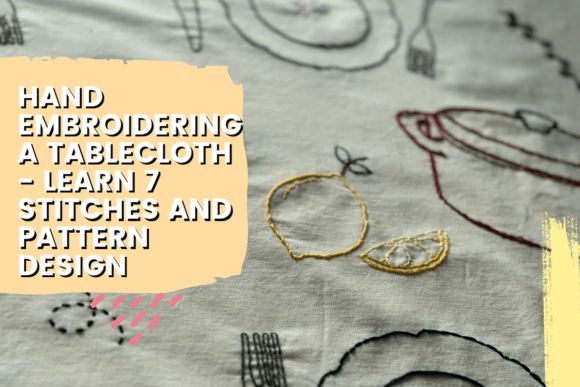
Hand Embroidering a Tablecloth
A Seasonal Designer’s First Impression
As an embroidery designer who’s built holiday collections for Etsy shops, craft fairs, and small-batch home decor lines, I opened Hand Embroidering a Tablecloth - Learn 7 Stitches and Pattern Design with high expectations—and was immediately drawn in by its warm, intentional mood. This isn’t flashy or trend-chasing. It feels cozy, elegant, and quietly festive—like linen draped over a farmhouse table lit by candlelight. The design leans into organic flow rather than rigid symmetry, with botanical motifs and subtle flourishes that read as nostalgic *and* timeless. That duality is gold for seasonal sellers: it works for Thanksgiving centerpieces, Christmas brunch linens, Easter luncheons, and even Valentine’s Day tablescapes without needing redesign.
Real-World Holiday Product Potential
This Creative Fabrica embroidery class isn’t just about stitching a single tablecloth—it’s a toolkit for scalable seasonal storytelling. I’ve already sketched how to adapt its core motifs across multiple product types:
- Sweatshirt embroidery: Scale down the central floral motif for left-chest placement—ideal for matching family sets or “Hostess With the Mostess” holiday apparel.
- Tote bag design: Use the border elements as a repeating band along the top hem; pairs beautifully with hand-lettered seasonal phrases (“Gather Joy,” “Cozy & Covered”).
- Kitchen towel embroidery: A simplified version of the corner motif adds quiet luxury to linen or cotton towels—perfect for gift bundles with artisan soap or local honey.
- Pillow cover & apron accents: The seven stitches taught (including satin, stem, lazy daisy, and French knots) translate directly into dimensional texture on woven cotton or canvas—no digitizing needed.
- Embroidered patch: Trace and simplify the central medallion for iron-on or sew-on patches on denim jackets, stocking caps, or kids’ backpacks.
For Etsy sellers, this class supports strong visual cohesion: same stitch language, same color harmony, same handmade authenticity across your entire holiday shop. And because it teaches pattern customization, you’re not locked into one size—you can scale confidently for baby blankets, napkins, or oversized hostess trays.
Where to Use It Thoughtfully
Like any thoughtful seasonal design, Hand Embroidering a Tablecloth - Learn 7 Stitches and Pattern Design shines brightest when matched to the right context. Avoid using its most delicate details—like fine vine tendrils or clustered French knots—in these situations:
- Small hoop sizes (under 4” diameter) where stitch density may overwhelm the space.
- Tiny lettering or script elements—if included in custom adaptations—on dark fabric without proper underlay or contrasting thread.
- Thick terry cloth or dense towels where raised stitches may flatten or distort.
- Stretchy garments like ribbed knits or lightweight sweatshirts without cutaway stabilizer and reduced stitch count.
- Items requiring frequent washing (e.g., baby bibs or kids’ aprons)—opt for shorter stitch lengths and secure anchoring.
Its strength lies in stable, medium-weight natural fabrics: linen, quilting cotton, canvas, and lightweight denim. That makes it ideal for heirloom-quality kitchen linens, framed wall art, and curated gift boxes—not fast-fashion apparel.
Why It Elevates Your Holiday Shop
In the final weeks before December, shoppers don’t just buy products—they buy feeling. Hand Embroidering a Tablecloth - Learn 7 Stitches and Pattern Design delivers emotional resonance through craftsmanship. When customers see the visible hand-stitched detail in your product photos—or feel the texture in person—it builds instant trust. That tactile authenticity translates directly to higher perceived value, stronger giftability, and better social media engagement (think slow-motion stitch videos or flat-lay unboxings).
It also strengthens brand consistency. If your shop centers around “slow-made, seasonally rooted” goods, this class gives you a repeatable visual rhythm—same stitch vocabulary, same reverence for materiality—across every category you touch. And because it teaches pattern adaptation, you’re not just reselling a file—you’re building your own signature style library.
Practical Notes from My Studio Desk
Before launching any seasonal item using this Creative Fabrica embroidery class, I always run these checks:
- Test thread colors on both light and dark fabric swatches—especially for tonal gradients or metallic accents.
- Confirm hoop size compatibility if adapting for machine use; some motifs may need repositioning for standard 5x7” hoops.
- Use appropriate stabilizer: tear-away for stable cottons, cutaway for knits or stretchy blends.
- Create realistic mockups—not just digital previews, but stitched samples on actual fabric, photographed in natural light.
- Review small details post-stitch: French knots should sit upright; satin stitch edges must be smooth and consistent.
- Plan cohesive palettes across your collection—e.g., terracotta + oat + sage for fall, or ivory + silver + deep evergreen for winter.
- Double-check Creative Fabrica product details and licensing terms before selling finished seasonal products commercially.
This class doesn’t promise speed—it promises substance. And in a market flooded with generic holiday files, that’s exactly what helps small shop products stand out, sell through, and become cherished keepsakes.