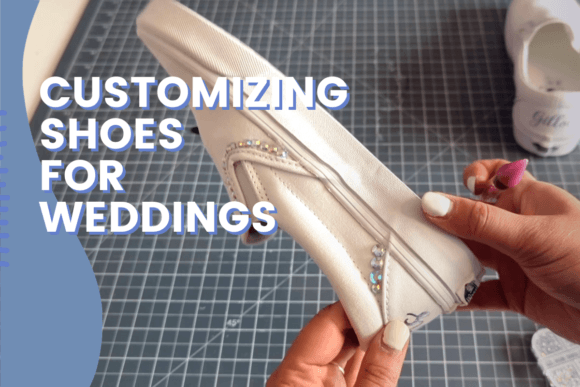
Customizing Shoes for Weddings
A Craft Fair Designer’s Real-World Review
As an embroidery designer who’s stocked over 200 craft fairs and managed a full-time handmade shop for eight years, I approach every new design like a buyer scanning a crowded booth: Does it stop me? Does it tell a story in under three seconds? Does it translate beautifully from screen to stitch—and from stitch to sale?
Customizing Shoes for Weddings lands with quiet elegance—not loud, not trendy, but deeply resonant. It reads as elegant, soft, and premium. There’s no forced whimsy or cutesy font; the title itself suggests intention, personalization, and occasion-driven meaning. That matters—especially when your booth is packed with tea towel sets and embroidered caps competing for attention.
Where This Design Shines on Craft Fair Products
On a tote bag? Instant heirloom energy—especially in ivory thread on natural linen or oatmeal canvas. It reads as bridal-ready but not exclusive to bridesmaids; think “gifting for the maid of honor” or “thank-you gift for the wedding planner.” As a tote bag design, it adds perceived value without overwhelming the fabric.
For apron embroidery, place it subtly near the pocket or along the waistband. Paired with delicate floral motifs or monogrammed initials, it becomes part of a cohesive bridal prep collection—think “bride’s kitchen apron,” “cake-decorating apron,” or “first-home gift set.”
On tea towel embroidery, scale matters. At 3.5" wide, it holds clarity on textured cotton terry—but avoid placing it over thick hems or dense weaves where stitch definition blurs. A single-line script version (if available) would perform even better here.
Embroidered patches are where Customizing Shoes for Weddings truly stands out. Mounted on satin ribbon or stitched onto clutch bags, they become tactile keepsakes. Customers love attaching them to shoes *after* the event—so consider bundling patches with mini embroidery kits or shoe-safe stabilizer sheets.
It works surprisingly well on caps—but only on structured, low-crown styles with smooth front panels. Avoid curved visors or heavily textured twill unless you’ve tested density and pull. On fabric pouches and pillow covers, it anchors a soft, romantic aesthetic—ideal for boutique makers building curated gift boxes.
What Holds It Back (And How to Fix It)
This isn’t a high-contrast, festival-ready graphic. Its strength lies in subtlety—so don’t force it onto dark denim totes or black velvet pouches without confirming thread contrast. Thread colors must lift: ivory on charcoal, pale gold on navy, or blush pink on cream. Always test on scrap fabric first.
Watch for stitch density. If the original machine embroidery design includes fine lacework around the pump silhouette or tiny rhinestone-effect fills, those details will vanish on towels, caps, or market bags. Simplify before digitizing—or source a clean, open-outline version.
Small lettering? Yes—especially if the phrase “for Weddings” appears in script. That risks illegibility below 2.75". For commercial embroidery, keep a simplified variant (e.g., just “Shoes for Weddings”) for patches under 2”. And never assume hoop size compatibility: confirm the widest dimension fits your standard 4x4 or 5x7 hoop before batch production.
Photography, Listings, and Digital Appeal
This design photographs beautifully—especially flat-laid on marble or draped over satin. It reads cleanly in printable mockups, making it strong for Etsy seller listings and social ads. Unlike busy florals or dense mandalas, it doesn’t compete with background textures. That means less editing time, faster listing turnover, and higher click-through on Pinterest.
For digital embroidery file sellers, pair it with alternate formats: a single-color outline for beginners, a two-tone version for Cricut + embroidery hybrids, and a “no-text” pump-only motif for repeat buyers wanting flexibility.
Booth Strategy & Customer Engagement
At a craft fair, Customizing Shoes for Weddings performs best as a *conversation starter*, not a standalone hero. Display it alongside finished products: a pair of ivory pumps with subtle side-embroidered vines, a linen pouch holding shoe inserts and a custom tag, or a framed patch sampler labeled “Personalize Your Day.”
Customers don’t buy “a shoe design”—they buy confidence, comfort, and ceremony. When you say, “This lets her wear her favorite flats *and* feel bridal,” you’ve shifted from decoration to emotional utility. That’s what turns browsers into buyers.
Production Notes Every Embroidery Designer Should Follow
- Always run a test stitch on scrap fabric matching your target product’s weight and texture—especially for towels and caps.
- Check thread contrast under both daylight and booth lighting. What reads soft in studio light may disappear under fluorescent fair tents.
- Review spacing between letters and elements—if the design crowds near edges or corners, adjust placement before hooping.
- Use cutaway stabilizer for knits or stretchy fabrics; tear-away for stable linens and cottons.
- Create at least one real-world finished product before ordering bulk materials—see how it drapes, wears, and photographs in motion.
- Compare fabric colors across your product line. Ivory thread on oatmeal canvas reads warm; on ecru linen, it reads cool. Consistency builds brand trust.
- Confirm commercial licensing status *before* selling physical goods. If this is a Classes-based design, verify whether the source permits resale of finished items—not just personal use.
Bottom line? Customizing Shoes for Weddings isn’t flashy—but it’s focused, emotionally intelligent, and commercially versatile. It elevates a small shop product without demanding extra labor. It invites storytelling, supports gifting, and fits naturally into bridal, prom, and milestone collections. In a sea of generic florals and quote-based designs, it’s a quiet standout—exactly what thoughtful Etsy sellers, handmade product makers, and boutique creators need to deepen their offering and raise perceived value.
Just remember: its power lives in precision—not volume. Stitch it right, position it thoughtfully, and let the occasion do the rest.