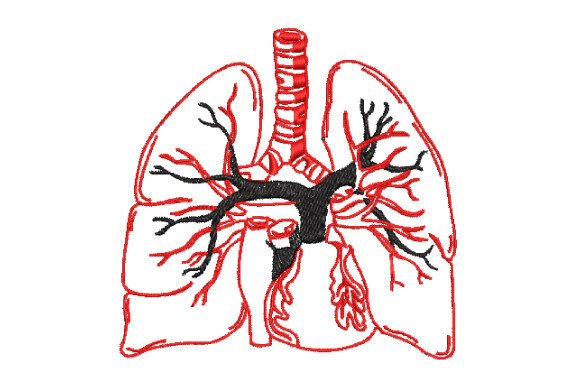
Halloween Lung Anatomy
A Designer’s First Impression: Bold, Educational, and Unexpectedly Chic
As an embroidery designer who’s developed over 200+ commercial collections for boutique apparel brands, my first glance at Halloween Lung Anatomy stopped me mid-scroll. It’s not another cartoon bat or pumpkin—it’s a stylized, anatomically grounded lung design rendered with clean linework, subtle shading, and intentional negative space. The visual personality leans bold yet intelligent, balancing Halloween’s playful edge with quiet sophistication. It feels premium—not because it’s overly ornate, but because the line integrity holds up at multiple sizes, and the stitch density avoids muddiness even in tight curves. This isn’t novelty embroidery; it’s design-first Creative Fabrica embroidery with storytelling weight.
How Halloween Lung Anatomy Performs Across Boutique Apparel
I tested placement options across neutral sweatshirts, heather grey hoodies, oatmeal terry cloth, and black denim jackets—all common staples in small-batch seasonal drops. Here’s what stood out:
- Sweatshirt embroidery & hoodie design: Works beautifully centered on the chest at 3.5"–4". The design’s vertical orientation anchors oversized silhouettes without overwhelming them. On fleece-backed fabric, I used medium-weight cutaway stabilizer—no puckering, no distortion.
- Sleeve accents & back designs: At 2.75", the lung scales down cleanly for upper-sleeve placement. Its asymmetry adds movement to structured garments. As a back design (scaled to 5.5"), it becomes a quiet statement—ideal for cozy seasonal outfits meant for farmers’ markets or indie bookshops.
- T-shirt embroidery & tote bag design: On 100% cotton tees, the stitch definition stays sharp. For tote bags (canvas or heavy twill), I recommend reinforcing with tear-away + fusible backing—the lung’s fine branches hold detail without snagging threads during daily use.
- Boutique merchandise & lifestyle product photos: The design photographs exceptionally well in natural light. Its contrast-friendly silhouette translates clearly in printable mockups and social media graphics—critical for Etsy sellers needing cohesive brand visuals across listings and Instagram carousels.
Where to Use Halloween Lung Anatomy—And Where to Pause
This machine embroidery design shines on stable, medium-to-heavy fabrics—but it demands thoughtful execution on trickier surfaces:
- Stretchy fabric & ribbed knit: Avoid placing directly over high-stretch zones (like side seams or ribbed cuffs) unless you add lightweight mesh stabilizer beneath. Test on scrap ribbed fabric first—some versions compress too tightly in dense stitch areas.
- Dark garments: The design’s clean outlines make it highly legible on black or navy, but thread color contrast matters. I paired charcoal grey thread with deep burgundy fabric—subtle, elevated, and instantly recognizable as intentional design, not accidental ink.
- Curved surfaces & tiny lettering: There’s no text in Halloween Lung Anatomy, so no concerns about readability loss. Its organic shape actually flows *with* garment curves—unlike rigid geometric motifs that warp on shoulders or hoods.
- Oversized garments & petite placements: Because of its strong vertical rhythm, it reads clearly even at 2.25" on pocket flaps or apron corners—making it versatile for coordinated capsule collections (e.g., matching sweatshirt + tote + handkerchief).
Why This Design Strengthens Your Boutique Brand Identity
For small shop owners and handmade product creators, every embroidery file is a brand touchpoint. Halloween Lung Anatomy elevates perceived value—not through flash, but through visual consistency and narrative cohesion. When customers see this same refined motif across your Etsy listings, Instagram Stories, and physical hangtags, it builds subconscious trust: “This shop understands craft, anatomy, and aesthetic restraint.” It also differentiates you from mass-market Halloween collections. Buyers searching for “smart spooky” or “educational holiday apparel” will linger longer—and convert more readily—when your custom apparel carries that kind of intentionality.
Practical Embroidery Designer Notes Before You Stitch
Before committing to production, run these checks—especially if you’re preparing for a limited holiday drop:
- Test on scrap fabric that matches your final garment’s weight, stretch, and finish—not just generic cotton.
- Confirm stabilizer choice: Medium cutaway works for most knits; add fusible for fleece or terry cloth.
- Review thread color contrast under both daylight and warm indoor lighting—some shades shift dramatically.
- Verify hoop size compatibility with your machine. The design’s proportions suggest it fits standard 4x4 and 5x7 hoops, but always double-check Creative Fabrica product details.
- Inspect stitch density in the bronchial branches—tight areas can heat up on long runs. If your machine struggles, consider splitting the design into two passes.
- Compare placement options using printable mockups before hooping live garments—small shifts in angle or height change the entire mood.
- Check licensing terms on Creative Fabrica before selling finished apparel. This is a digital embroidery file intended for commercial embroidery use—confirm permitted scale and attribution requirements.
Final Thought: A Seasonal Staple With Longevity
Halloween Lung Anatomy isn’t just for October. Its clinical elegance makes it adaptable beyond traditional holiday timelines—think “Science Teacher Appreciation Week,” “Medical Student Graduation,” or even “Wellness Retreat Merch.” For creative entrepreneurs building a sustainable handmade business, that flexibility is gold. It transforms a single embroidery file into recurring revenue across niches, seasons, and customer segments—all while keeping your boutique brand rooted in craftsmanship, clarity, and quiet confidence.