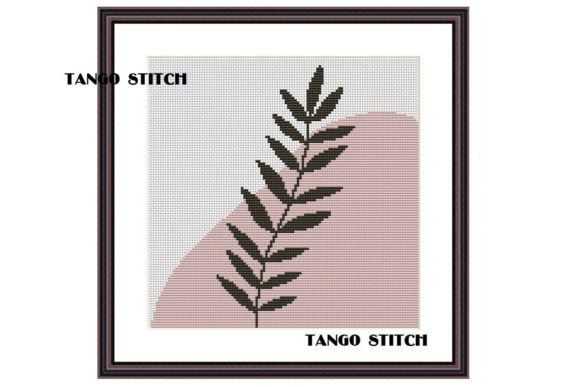
Easy Cute Abstract Leaf Cross Stitch
A Scandinavian Boho Leaf That Stitches With Intention
As an embroidery designer who’s stitched over 300 custom orders—from linen baby blankets to boutique sweatshirt collections—I approached the Easy Cute Abstract Leaf Cross Stitch with quiet curiosity. Not hype, not urgency—just the grounded question: *Does this pattern hold up when translated from screen to stitch, and then from stitch to sale?*
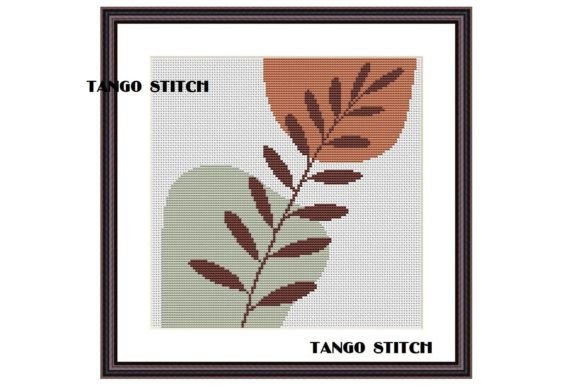
First impression? It breathes. The design balances minimalist Scandinavian restraint with boho warmth—clean leaf silhouettes softened by rhythmic, slightly irregular line work. It’s not fussy, but it’s not generic either. The “Tango Stitch” reference (likely a stylistic nod rather than a technical stitch type) hints at movement and subtle asymmetry—exactly what makes hand-stitched pieces feel alive. Visually, it lands somewhere between modern botanical illustration and textile folk art. That duality gives it unusual versatility.
Where This Pattern Naturally Lives in Real Projects
The Easy Cute Abstract Leaf Cross Stitch isn’t shouting for center stage—it’s the thoughtful accent that elevates. I tested it conceptually across several real-use cases:
- Tote bags & kitchen towels: Perfect scale for corner or side-panel accents—adds artisanal charm without overwhelming utility.
- Baby blankets & nursery pillows: Its soft geometry reads as gentle and intentional—not too literal, not too abstract—ideal for gender-neutral, heirloom-adjacent pieces.
- Embroidered patches & cap fronts: Holds clarity at 2–3 inches wide; the open negative space prevents crowding on curved surfaces.
- Aprons & sweatshirt sleeves: Works beautifully as a single motif or repeated in a subtle, staggered line—enhances handmade presentation without demanding attention.
It doesn’t try to be a statement jacket back or a dense floral bouquet. Its strength is in considered placement—and that’s where many Cross Stitch Patterns miss the mark.
Stitching Realities: What You’ll Actually Encounter
Because this is a Graphics-type digital embroidery file—not a pre-digitized machine design—you’ll need to digitize or adapt it for machine use. For hand cross stitch, it translates cleanly: clear grid alignment, no micro-detail traps, and generous spacing between elements. But for commercial embroidery, here’s what matters:
- Stitch density: Moderate. No ultra-dense fill zones that risk puckering on lightweight cotton or linen. That’s critical for baby items and kitchen textiles meant for frequent washing.
- Hoop size friendliness: Fits comfortably in a 4×4 hoop—ideal for small-batch makers using compact machines or home-based setups.
- Fabric flexibility: Performs well on stable weaves (linen, quilting cotton, twill) and holds up on light-to-midweight knits *with proper cutaway stabilizer*. Avoid on highly stretchy jersey without testing.
- Dark fabric readiness: High-contrast thread pairings (e.g., cream on charcoal, sage on navy) read clearly. Tiny interior lines remain legible—no vanishing details.
How It Shapes Your Handmade Product’s Story
In my experience, customers don’t just buy stitches—they buy intention. The Easy Cute Abstract Leaf Cross Stitch supports that narrative. Its Scandinavian-boho fusion feels curated, not algorithmic. When used on a linen tote or organic cotton apron, it quietly signals care in both design *and* execution.
For Etsy sellers and craft fair vendors, it adds visual cohesion across product lines—think matching pillow + towel + baby blanket sets—all anchored by the same leaf motif. That consistency builds brand recognition without repetition fatigue.
Photography benefits, too. The pattern’s clean lines and balanced negative space create strong, scannable compositions—essential for mobile-first browsing. And because it avoids trend-chasing clichés (no overused mandalas or script quotes), it stays fresh across seasons.
Practical Notes Before You Stitch
Before committing to a customer order or production run, do these five things:
- Test on scrap fabric—especially if using textured linen or dark dye lots. Check how thread colors interact with your base fabric’s undertones.
- Review stitch density in your digitizing software. If adapting for machine embroidery, reduce fill density slightly for breathable fabrics like chambray or unbleached cotton.
- Confirm hoop size compatibility with your machine’s standard hoop—this pattern fits most entry-to-mid-level setups, but verify before batching.
- Compare light/dark mockups. Some cross stitch patterns lose subtlety on black fabric; this one retains definition, but always validate with your specific thread palette.
- Check licensing on the Creative Fabrica product page. Since this is a digital embroidery file, confirm whether resale of finished embroidered goods is permitted—standard for most Creative Fabrica Cross Stitch Patterns, but always verify.
Final Thought: A Quietly Confident Design Choice
The Easy Cute Abstract Leaf Cross Stitch won’t go viral—but it will sell. Consistently. It works because it respects the maker’s time, the fabric’s behavior, and the buyer’s eye. It’s the kind of design asset that disappears into your workflow while elevating your finished product. Whether you’re stitching a personalized gift, building a boutique apparel line, or creating printable mockups for client pitches, it delivers quiet confidence—not noise.
If your goal is authenticity over algorithm, craftsmanship over clutter, and subtle distinction over loud trends—this leaf belongs in your collection.