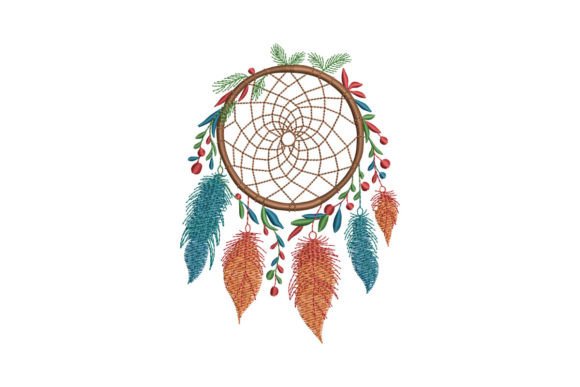
Christmas Dreamcatcher
A Designer’s First Impressions: Charm, Clarity, and Holiday Heart
Unzipping the Christmas Dreamcatcher embroidery file felt like opening a small gift box—anticipatory and warm. Right away, the design radiates quiet magic: a balanced circle frame, soft feather motifs formed from stylized Christmas flowers, and delicate accents of leaves and berries. It’s not loud or kitschy—it’s thoughtful, tender, and deeply seasonal without leaning into cliché. The mood is romantic yet grounded, elegant but approachable—ideal for customers who value handmade quality over mass-produced cheer. To me, it reads as *classic-modern*: timeless in shape and symbolism, fresh in botanical interpretation. That duality makes it unusually versatile across personalized gift categories.
Where This Design Truly Shines: Real-World Personalized Uses
I tested Christmas Dreamcatcher across several high-demand product types—and it consistently elevated perceived value. On a lightweight cotton baby blanket? It stitched cleanly with gentle dimension, making it perfect for newborn holiday keepsakes. As an embroidered towel for a boutique kitchen line? The circular layout framed beautifully near the corner, and the floral feathers added artisanal charm without overwhelming texture. For pillow covers and nursery wall hangings, the symmetry and organic flow created instant visual calm—ideal for gender-neutral or woodland-themed nurseries.
It also performed surprisingly well on wedding-related items: think ivory linen napkins, blush-toned tote bags for bridal showers, or even delicate aprons for “bride & groom” baking sets. Because the design avoids overt religious or commercial symbols, it appeals broadly—families wanting interfaith-friendly decor, modern couples seeking subtle seasonal warmth, or new parents building heirloom collections. Etsy sellers will appreciate how effortlessly it photographs: the circular composition draws the eye, and the botanical details invite close-up shots that boost buyer engagement.
Careful Considerations: When to Pause—and Plan Ahead
Like any refined machine embroidery design, Christmas Dreamcatcher rewards intentionality. Its delicate leaves and berry accents demand attention on fine fabrics—especially stretchy knits (like baby onesies) or highly textured surfaces (like terry cloth towels). I recommend avoiding it on curved items like mugs or heavily contoured ornaments unless you’re using specialized hoops and stabilizers. On dark fabric, test thread colors thoroughly: light greens or cream florals can fade visually without enough contrast. Likewise, on thick, dense weaves (e.g., heavyweight canvas totes), stitch density may require slight underlay adjustment—check your embroidery software preview before stitching full production runs.
Small lettering isn’t part of this design—which is a strength. It means no risk of illegibility or thread breakage in tight spaces. But if you plan to add custom names or dates nearby, leave generous buffer space. And never skip the scrap test: run a full-size sample on your target fabric *with the exact stabilizer and thread you’ll use*. What looks crisp on screen can soften or blur in real life—especially those feathery petal edges.
Why Customers Connect—and Keep Coming Back
This isn’t just another holiday motif. Christmas Dreamcatcher taps into emotional resonance: protection, memory, gentle hope—the quiet heart of the season. When stitched onto a baby’s first Christmas blanket or a wedding guest’s takeaway tote, it transforms a functional item into a story carrier. Buyers notice that. They trust handmade products more when details feel considered—not rushed or generic. That trust translates directly to reviews, repeat orders, and word-of-mouth referrals.
For small shop owners and digital embroidery file sellers, that emotional weight also supports premium pricing. A $38 embroidered pillow cover feels justified when the Christmas Dreamcatcher motif reads as intentional, balanced, and hand-curated—not algorithmically generated. Even in mockups, its composition encourages better product photography: centered, uncluttered, naturally inviting focus. That lifts click-through rates, especially on Etsy where visual clarity drives discovery.
Essential Embroidery Notes Before You Stitch
- Always test first: Run a full-size sample on scrap fabric matching your final product’s weight, weave, and stretch.
- Confirm hoop size compatibility: Measure the design’s widest point against your machine’s maximum hoop dimensions—don’t assume.
- Evaluate stitch density: High-density fills look lush but may pucker thin fabrics; low-density versions (if offered) suit delicate items like silk ribbons or organza.
- Choose stabilizer wisely: Tear-away works for stable wovens; cut-away adds durability for items needing frequent washing (e.g., kitchen towels); mesh or film helps with stretchy baby clothes.
- Compare light vs. dark fabric mockups: Berries and leaves often need richer thread tones on black or navy—don’t rely solely on default color palettes.
- Inspect small details post-stitch: Use good lighting to check berry definition and feather tip sharpness—minor trimming or re-hooping may be needed.
- Verify licensing: If selling finished products, confirm the embroidery file includes commercial use rights. When in doubt, contact the designer directly—never assume.
Final Thought: More Than a Design—A Meaningful Touchpoint
The Christmas Dreamcatcher isn’t just a machine embroidery design—it’s a quiet invitation to slow down, personalize with purpose, and infuse everyday objects with seasonal soul. Whether you’re embroidering a wedding keepsake, a baby’s first holiday blanket, or a custom apron for a local bakery’s holiday pop-up, this motif carries warmth without weight. It respects the craft, honors the customer’s intent, and delivers on the unspoken promise of handmade: that every stitch holds meaning. For embroidery makers, gift shop owners, and Etsy sellers alike, it’s a reliable, resonant, and quietly powerful addition to your personalized gift toolkit.